| |
Ceremonies, ideas, and products that might help you plan the perfect wedding.

Subscribe to this blog
I recently read a post by the bride Diorable as she described how she was planning her interfaith wedding. She talked about how they were choosing the traditions they would have in her ceremony, to make it fit the personality and beliefs of her and her fiancĂ©. As she described it: “This isn’t a sundown thing with a ketubah. We are absolutely cherry picking.”
I applaude Diorable’s creativity and drive to create a ceremony tailored to them. The whole point of the wedding is that it is a ceremony of two people coming together as one, and it therefore needs to reflect who those two people are.
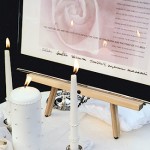
“Cherry-picking” traditions is a common way to construct an interfaith wedding ceremony. When my wife and I were planning our wedding, we also cherry-picked different aspects of our combined Jewish and Catholic traditions for our wedding. This let us honor our traditions, while defining our own combined values. We had two friends sing a modern version of the Seven Blessings. Another friend read an updating translation that I wrote of the famous Corinthians passage “Love is patient, love is kind”. We stood under a huppah as my cousin the priest and our rabbi both gave their blessings. We lit a unity candle, then stomped a glass. Some might find this kind of ceremony a little crazy or inauthentic, but we loved it — it fit us perfectly. It wasn’t a Jewish wedding, it wasn’t a Catholic wedding — it was our wedding.
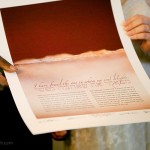
And of course, even aspects of a ceremony that are considered “very traditional” can be modernized and updated to fit your personality. The ketubah is a perfect example. Many people might still assume that having a ketubah automatically makes a wedding very Jewish or very traditional (as Diorable described it “a sundown thing”). But not any longer. Most of the ketubahs I create are for interfaith and multicultural couples. They decided to add this tradition to their ceremony, but didn’t want it to feel overly “traditional”. So they made a ketubah that is modern, inclusive, and very personal.
In our wedding, our crazy combined ceremony worked to bring our two families together in a beautiful and special way. Each side could relate to part of the ceremony, and share the experience of something new. We explained the traditions throughout the ceremony, in simple terms, so that everyone could appreciate the parts they weren’t familiar with. We worked carefully with our rabbi to make sure the ceremony came together as a whole, and that no one felt left out, or confused. And in the end, our families loved it as much as we did. It was as much a celebration of our new marriage, as it was of our families and traditions that helped make us who we are.
Update 2010-03-01: On the blog Fifty Percenters, PrincessMax shared the details of the thoughtful wedding program she created for her interfaith wedding. It is a great example of how you can explain all of the elements of your ceremony to your family and guests, so that they all feel a part of the celebration.
When you are planning an interfaith wedding, it’s a good idea to provide an explanation of the different traditions in your wedding program. This gives everyone the chance to understand the meanings behind the traditions you selected for your wedding. Plus, it makes both sides of the family feel welcome and included in the ceremony. One of my couples shared with me the text they used in their program:
The Ketubah is the Jewish marriage contract, outlining the responsibilities of the bride and the groom. The Ketubah confirms that Andrew and Joanna willingly accept each other and assume obligations to one another. One of the oldest elements of a Jewish wedding, the Ketubah dates back over two thousand years. Today, most Ketubot (plural form of Ketubah) are spiritual, not legal, covenants that the bride and groom make with one another. Prior to the wedding ceremony, Andrew, Joanna and the Rabbi signed the ketubah in the presence of two witnesses, family and friends.
When my wife and I got married, we were still living in San Francisco, but our wedding was closer to our family in New Jersey. Let me tell you, planning a long distance wedding has its challenges! One of which is how to safely bring your ketubah on the plane with you. I get asked this a lot, so I thought I’d share some advice. First, have me ship your ketubah to you, not to the wedding site. It is really important that you see your ketubah in person, well before the ceremony. This will let you look it over carefully, and make sure that it is exactly what you ordered. And if it got accidentally damaged in shipment, this will give me a chance to replace it for you.
Traveling with your ketubah
I ship your ketubah rolled between sheets of acid-free tissue paper, and placed in an extra-strong shipping tube. Experience has shown that this is the safest way to ship unframed fine art. (Shipping it flat is both more expensive, and results in more damage.) So the best way to travel with a ketubah is to reuse this shipping tube. Place your ketubah between the tissue paper I provided, and carefully reroll in and place it in the tube. You now have a safe and portable package to carry with you. Be sure to bring it with you in carry-on, or stash it safely deep in the middle of your suitcase, surrounded on all sides by clothes.

When you arrive
When you get to the location of your wedding, take your ketubah out of the tube, and let it unroll. The paper will keep its curl for a while, but don’t worry. The paper of your ketubah is 100% cotton-rag, so it will easily “forget” the curl over time. When you remove it, you could gently use the tube to roll it in the opposite direction to remove the curl more quickly. If you feel uncomfortable doing this, just lay it flat like I suggested for a day or so to get rid of the worst of the curl. For my own wedding, I used an inexpensive poster frame to flatten the ketubah, and then protect it throughout the wedding and reception. When you are ready to have it framed, your framer can make sure that any remaining curl is removed.
One thing I have learned is that every ketubah is unique. Each one takes on the personality of the couple who make it, through the design they select, the words they choose. Watching each couple craft a ketubah that reflects their personality is one of the things that make my job as a ketubah artist so interesting.

One couple, Krista and Matthew, just came to me with a unique and fun request. They are an interfaith couple, Catholic and Jewish. So they wanted the text of their ketubah to reflect both of their traditions. But their idea was to not just do this through the words they used, but through the languages used as well. Just like Judaism is grounded in its use of Hebrew, Catholicism is rooted in Latin. Although it is not used anymore for regular services, the language is still a part of the flavor of Catholic culture. Krista and Matthew wanted their ketubah to respect both of these linguistic traditions. So we created a ketubah that blended English, Hebrew and Latin. Luckily Krista had an aunt who knew enough Latin to provide a translation! The result was quite special, and very much reflected the personality of Krista and Matthew.

Yesterday I bumped into one of my ketubah customers, Marni Gold, on Twitter. I discovered that like me, Marni started up her own business inspired by her own wedding. She creates custom card boxes to store your wedding gifts and invitations. As she says “When planning my own wedding I was searching for a unique and secure way to store gifts and cards at the wedding. Frustrated with the gaudy, tacky or just plain expensive options I found, I created my own custom cardbox that was simple, elegant, and understated while still matching my theme.”
Creative Custom Cardboxes specializes in producing an affordable custom designed cardbox/gift holder for your special occasion. Creative Custom Cardboxes will hold your gift cards and keep them safe in a fun and stylish manner. She does beautiful work, so be sure to check it out!
Elyssa, who purchased the Horizon Ketubah from me just wrote and asked for some advice for framing her ketubah after the ceremony. First of all, I always recommend that you take your ketubah to a local quality frame store. I don’t sell frames myself, since it’d be too expensive to ship them safely, and it would be too hard for me to provide you with the range of options your local frame shop has. Your frame store can provide you with a huge range of materials to choose from. And with their expert advice, you’ll be able to find a frame that will complement both the ketubah and your home’s decor.
Some general advice: When you get your ketubah framed, ask them to treat it like the work of art that it is. Insist that the matt be archival quality, acid-free, and non-buffered. The ketubah should be attached to the matt using art corners or cloth tape. (I do not recommend that you let them dry mount your ketubah, since this cannot be undone.) The glass or plexiglas should have the maximum UV protection available. It may cost more, but the investment will be worth it. Make sure they understand what this ketubah means to you, and that it is irreplaceable.
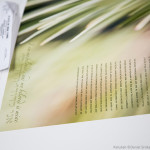
When chosing the materials for your frame, consider the artwork itself. For the Horizon ketubah, I’d recommend having a white or ivory matt of at least 2-3″ in width, and using a dark wood frame. Since the Horizon ketubah is a macro photograph of a dried leaf, full of tiny details and textures, I believe that the natural grain of a wood frame would bring out that texture much better than metal. A dark wood would complement the darker tones of the ketubah.
I hope this helps. And remember, after you get your framed, I’d love to see a photo of how it looks!
I was recently asked:
My wife and I were married almost 20 years ago. Our ketubah was not protected well and has tears along its edges and is beginning to frey. Would our ketubah be repairable?
While you might not be able to repair the existing damage, you can prevent it from being damaged further. This is not a service I do, but I think you could find help at a good quality frame shop. Look for someone who has experience in framing old prints, because they might be able to help you frame it in a way that preserves it better. One way they can preserve the ketubah would be to sandwich it between two sheets of acetate (so that it is “floating”) and then frame it. This would keep the frayed ends secure, protect it from UV light (to mimimize further yellowing), and keep the ketubah from getting damaged further. They might recommend that you dry-mount it to a board. This would definitely make it more secure, but would also be something you couldn’t un-do, so I’d be careful about that. Whatever they do, make sure they use archival materials, and ask to see samples of the technique. And, reinforce to them that your ketubah is irreplaceable.
Another option you might consider is getting your ketubah scanned. The graphic artist could retouch the scan, cleaning up all signs of damage, and print a new copy on acid-free paper. You could then put away your original ketubah to keep it safe, and use the new cleaner copy to hang on your wall.
|
|