The Modern Ketubah Blog : Ketubah Design

From new designs to text options, let me help explain some of the choices you have when creating your ketubah.
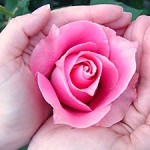
The rose that inspired my ketubahs

Lindsey, a new customer, was just telling me why she and her fiancé chose my Center Ketubah, based on a photograph I took of a rose:

My future husband has a thing for roses. He has about 12 different rose bushes growing at our house in Denver. So when we saw your rose ketubahs, we knew we had to get it!

I love this! First of all, it’s an honor to have one of my photographs of a rose selected by a true rosarian. But their story also reminded me of my own:

The rose that inspired many of my ketubah designsThe rose in the ketubah they chose is actually the same rose that I photographed for my own ketubah that I made for my (then) fiancée and I. We had just moved into an old bungalow in the suburbs of San Francisco. Most of the landscaping was a mess, but on the side of the house was this craggy, ancient rose bush. It had definitely seen better days, and was looking rather bedraggled. But we thought we’d give it a shot. We cleaned up the garden around it, pruned it way back, and hoped for the best. The next spring, we were amazed. The old bush began sprouting the largest and most fragrant roses we had ever seen! The flowers were gorgeous, picture-perfect roses. The biggest blooms could fill your hand, as my fiancée is demonstrating in this photo. For the next week, I would bring out my camera and photograph many of these flowers, preserving them, exploring them, getting to know them.

Shortly afterwards, we were doing research for our ketubah. As you might already know, we weren’t happy with the ones we found, so I had decided to make one myself. After exploring a number of options, I chose a photograph of this exact rose, and created my first ketubah from it. We loved the living symbolism of this flower: how a tough and resilient vine, tended with a little care, could create flowers of such beauty and grace. This said more to us about what it means to be married than any of the more traditional ketubahs we had seen.

Once I started Modern Ketubah, I went on to make a couple more ketubah designs, Center Ketubah and Opening Ketubah, from photographs I took of that same rose. These designs have become some of my most popular. And every time I make a new ketubah from one of them, I smile and think of that old vine by our old house, still blooming, still growing.

The Center Ketubah by Daniel Sroka

The Center Ketubah by Daniel Sroka

Added July 17th, 2009  in  Ketubah Design   

when you have a lot for your ketubah to say

If you want the most personal ketubah, you should consider writing your own words. Or, if you are like Lori and Seth, you can mix and match, combining your own words, with the words of others, and even some traditional texts. For their ketubah, Lori and Seth wanted to combine their own text, with the tradition Conservative Hebrew text, and used a favorite song lyric for a custom poetic verse.

It was a lot of text to work with, and at first we weren’t sure it would work! The challenge with putting a lot of text in a ketubah is that it can quickly feel overly crowded, more like a legal document than a work of art. But Lori and I worked closely together, trading emails and phone calls, and I was able to create a ketubah for them that is very personal while still being classy and beautiful.

Lori and Seth customized the Horizon Ketubah

Lori and Seth customized the Horizon Ketubah

Added June 10th, 2009  in  Ketubah Design   

New ketubah designs for 2008

I have just released seven new ketubah designs for Modern Ketubah. I created these new ketubahs from my some of my most recent photographs of lilies, roses, wildflowers and leaves. If you are interested in learning about how I got about creating these new ketubah designs, please read this post on my fine art photography blog.

Here are two of the seven new ketubah designs: Horizon Ketubah and Wildflower Ketubah.

Horizon Ketubah from Modern Ketubah ©Daniel Sroka Wildflower Ketubah from Modern Ketubah ©Daniel Sroka

You can find all of my new ketubah designs here.

Added February 13th, 2008  in  Ketubah Design, News   

How much Hebrew should my ketubah have?

A question I often get asked is “How much Hebrew should my ketubah have?”. This party depends on the type of ceremony you are having, and partly on your attitude towards the ketubah. If you are having a Conservative or Orthodox ceremony, your Hebrew text is pretty much set. There is a traditional text used for the Orthodox ketubah (often referred to as the “Aramaic text”). Conservative ketubot use that Orthodox text, and add a paragraph called the Lieberman Clause. This is a text added in the 1950s to clarify the rules about divorce. (Sentimental, no?)

If you are having a Reform or an interfaith ceremony, you have many more options. A Reform ketubah just needs to contain the text: “On the ___ day of the ___ month of the year ___ in the community of ___, the groom ___ son of ___ and the bride ___ daughter of ___ were wed according to the laws of Moses and Israel.” Beyond that, you could add anything you want. An interfaith ceremony often includes the same text, just leaving off the part about “according to the laws of Moses and Israel”, since technically speaking, an interfaith ceremony doesn’t adhere to those laws.

Beyond that basic text, a Reform or interfaith couple can add as much Hebrew as they like. Some people prefer to have little to no Hebrew. The idea is that since the ketubah is a contract between the bride and the groom, and they want the language to be something they can read and understand. Other people like to have a balance between the Hebrew and the English. For them, I offer what I call the “Egalitarian Hebrew”. This is a full translation of my Standard English text, creating a ketubah that is truly bilingual.

What ever you choose, I always recommend that you have your rabbi review the proof of your ketubah. Since he is the official signer of the ketubah, its important that he sees and approves what it says.

Added June 16th, 2006  in  Ketubah Design   

Hiddur mitzvah

In the Jewish tradition “hiddur mitzvah”, it is a mitzvah, a good act, to make religious objects as beautiful as possible. Beautifying these ceremonial objects heightens their spiritual quality, and reflects their importance and value. I believe that it also encourages people to make those objects an integral part of their lives. Here’s an example: we used to have a plain-looking menorah that my wife picked up in college. It was functional, but not that attractive, so it stayed in the closet most of the year. But after our son was born, we wanted to “upgrade” and find a new menorah for our new family, something that could become an heirloom. We found one made by a metalsmith from Vermont that was (to put it simply) gorgeous. Simple, pure, strong — a real work of art. Because of that beauty, an object that was once hidden now stays on our mantle all year long.

It’s a wonderful concept, and one that I find very compelling as an artist. It reinforces what many of us artists already feel at a gut level — that our work can serve a greater purpose than simply making “pretty things”. That making beautiful things can itself be a spiritual act. I think of this a lot as I make ketubot. My goal is to make this cermonial object as beautiful as possible, so that the couple who receives it will think of it not only as a wedding document, but a work of art that they will treasure.

Added May 26th, 2006  in  Ketubah Design   
« see newer posts | see older posts »