| |
In this blog I will discuss what goes into creating ketubot, ideas about wedding ceremonies and traditions, and answer some of the questions and comments from the couples I've worked with. Subscribe to this blog 
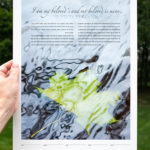
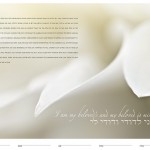
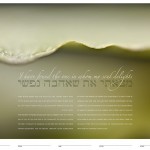
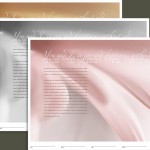
I have just released seven new ketubah designs for Modern Ketubah. I created these new ketubahs from my some of my most recent photographs of lilies, roses, wildflowers and leaves. If you are interested in learning about how I got about creating these new ketubah designs, please read this post on my fine art photography blog.
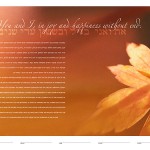
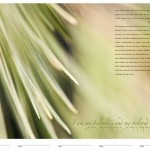
Here are two of the seven new ketubah designs: Horizon Ketubah and Wildflower Ketubah.
You can find all of my new ketubah designs here.
I was recently asked:
My wife and I were married almost 20 years ago. Our ketubah was not protected well and has tears along its edges and is beginning to frey. Would our ketubah be repairable?
While you might not be able to repair the existing damage, you can prevent it from being damaged further. This is not a service I do, but I think you could find help at a good quality frame shop. Look for someone who has experience in framing old prints, because they might be able to help you frame it in a way that preserves it better. One way they can preserve the ketubah would be to sandwich it between two sheets of acetate (so that it is “floating”) and then frame it. This would keep the frayed ends secure, protect it from UV light (to mimimize further yellowing), and keep the ketubah from getting damaged further. They might recommend that you dry-mount it to a board. This would definitely make it more secure, but would also be something you couldn’t un-do, so I’d be careful about that. Whatever they do, make sure they use archival materials, and ask to see samples of the technique. And, reinforce to them that your ketubah is irreplaceable.
Another option you might consider is getting your ketubah scanned. The graphic artist could retouch the scan, cleaning up all signs of damage, and print a new copy on acid-free paper. You could then put away your original ketubah to keep it safe, and use the new cleaner copy to hang on your wall.
A question I often get asked is “How much Hebrew should my ketubah have?”. This party depends on the type of ceremony you are having, and partly on your attitude towards the ketubah. If you are having a Conservative or Orthodox ceremony, your Hebrew text is pretty much set. There is a traditional text used for the Orthodox ketubah (often referred to as the “Aramaic text”). Conservative ketubot use that Orthodox text, and add a paragraph called the Lieberman Clause. This is a text added in the 1950s to clarify the rules about divorce. (Sentimental, no?)
If you are having a Reform or an interfaith ceremony, you have many more options. A Reform ketubah just needs to contain the text: “On the ___ day of the ___ month of the year ___ in the community of ___, the groom ___ son of ___ and the bride ___ daughter of ___ were wed according to the laws of Moses and Israel.” Beyond that, you could add anything you want. An interfaith ceremony often includes the same text, just leaving off the part about “according to the laws of Moses and Israel”, since technically speaking, an interfaith ceremony doesn’t adhere to those laws.
Beyond that basic text, a Reform or interfaith couple can add as much Hebrew as they like. Some people prefer to have little to no Hebrew. The idea is that since the ketubah is a contract between the bride and the groom, and they want the language to be something they can read and understand. Other people like to have a balance between the Hebrew and the English. For them, I offer what I call the “Egalitarian Hebrew”. This is a full translation of my Standard English text, creating a ketubah that is truly bilingual.
What ever you choose, I always recommend that you have your rabbi review the proof of your ketubah. Since he is the official signer of the ketubah, its important that he sees and approves what it says.
In the Jewish tradition “hiddur mitzvah”, it is a mitzvah, a good act, to make religious objects as beautiful as possible. Beautifying these ceremonial objects heightens their spiritual quality, and reflects their importance and value. I believe that it also encourages people to make those objects an integral part of their lives. Here’s an example: we used to have a plain-looking menorah that my wife picked up in college. It was functional, but not that attractive, so it stayed in the closet most of the year. But after our son was born, we wanted to “upgrade” and find a new menorah for our new family, something that could become an heirloom. We found one made by a metalsmith from Vermont that was (to put it simply) gorgeous. Simple, pure, strong — a real work of art. Because of that beauty, an object that was once hidden now stays on our mantle all year long.
It’s a wonderful concept, and one that I find very compelling as an artist. It reinforces what many of us artists already feel at a gut level — that our work can serve a greater purpose than simply making “pretty things”. That making beautiful things can itself be a spiritual act. I think of this a lot as I make ketubot. My goal is to make this cermonial object as beautiful as possible, so that the couple who receives it will think of it not only as a wedding document, but a work of art that they will treasure.
One of the most common questions I receive is: How long does it take to make a ketubah? The truth is, you could get one in 30 seconds: just visit your rabbi and he’ll pull a blank form “ketubah” from his desk. Official, yes. But it has more in common with a job application than a symbol of your wedding! To get a ketubah that is a work of art, that takes just a little longer. The ketubah is one part of your wedding you should not choose because “it’s fast”.
When you order one of my ketubot, it usually takes 3 to 4 weeks for you to get it. Why does it take that long? There are a lot of things that need to get done — by me, by you, and by your rabbi. First, if your text has any Hebrew, you’ll need to collect some information, like your Hebrew names, and the Hebrew names of your parents (some people know this off the top of their head, while others need to go digging). Once I get this information, I personalize your English and Hebrew texts, create your ketubah, and send you an email with proofs. You then review the proofs with a fine-toothed comb, making sure everything is correct. You should also ask your rabbi to review the Hebrew (he’s going to sign it, so he needs to make sure everything is ok). Once everything meets your approval, I print and ship your ketubah to you.
Of course if your wedding is coming up fast, just send me an email — if we work together, we may be able to get everything done much faster.
Pages (2): [1] 2 >>
|
|